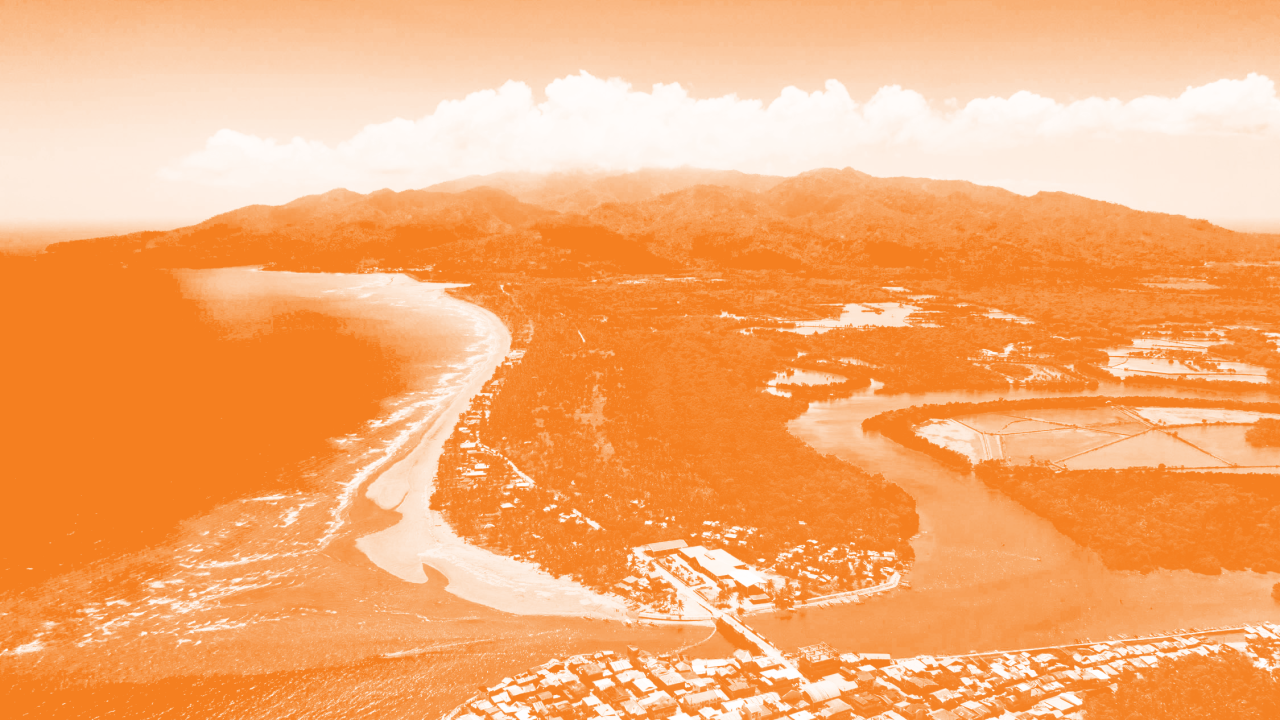
Report warns of El Niño’s growing threat to Philippine seas and coastal communities as Super El Niño looms
As the Philippines braces for the impacts of a Super El Niño expected to persist into the first half of 2027, environmental groups are sounding the alarm on the growing threats of extreme heat and prolonged drought to the country’s marine ecosystems, fisheries, and coastal communities.
In its report, Seas at a Boiling Point: Assessing El Niño Impacts on Philippine Seas and Coastal Communities, the Center for Energy, Ecology and Development (CEED) examines the impacts of the 2024 El Niño phenomenon in the Philippines and assesses the potential consequences of the 2026/2027 El Niño on the country’s coastal and marine resources.
The impacts of the previous El Niño demonstrate the scale of damage that extreme heat and prolonged drought can inflict on the country’s food systems and livelihoods. According to the final report of the Department of Agriculture (DA), the 2024 El Niño resulted in ₱15.3 billion and the ongoing El Niño is already causing substantial damage.
As of October 14, 2026, the National Disaster Risk Reduction and Management Council (NDRRMC) reported nearly ₱6.5 billion in agricultural damage across 10 regions but the economic consequences could be even greater. An economic analysis estimates that the 2026/2027 El Niño could result in ₱286.8 billion in nationwide direct and indirect losses which includes ₱77.8 billion in direct losses from crop failures and declining fish catch, and ₱209 billion in indirect losses arising from unemployment, disrupted supply chain and inflation pressures.
“El Niño is not just a seasonal climate phenomenon anymore when viewed against the backdrop of a worsening climate crisis. Supercharged by the climate crisis, its impacts expose how vulnerable our ecosystems and communities have become, particularly when we continue to allow fossil fuel dependence and inadequate climate action to put more people at risk. We need to move beyond reactive responses and address the structural drivers of the climate crisis,” said Gerry Arances, Executive Director of Center of Energy, Ecology and Development.
The report comes at a critical time as the 31st Conference of the Parties to the United Nations Framework Convention on Climate Change (COP31), currently underway in Antalya, Türkiye, places oceans and seas, food security, and climate resilience among its key priorities. Among the report’s findings are the impacts of rising sea temperatures on coral bleaching, marine biodiversity, and fish distribution which threaten fisheries and food security, adding pressure to coastal communities already experiencing declining fish catches, increasing livelihood costs, and health risks from extreme heat.
For fisherfolk, these changes are already being felt in their daily lives and livelihoods. “We experience these changes in our daily lives. When there are fewer fish to catch, our income becomes uncertain, and even the basic needs of our families become harder to provide. We need support that responds to what is actually happening in our communities, not just promises of climate action,” said Benito “Bennie” De Castro, a fisherfolk leader and president of Bukluran ng Mangingisda ng Batangas.
These experiences from the report shows the disproportionate burden placed on coastal communities, who contribute little to the climate crisis but face its worsening consequences. “Our coastal communities are already bearing the consequences of a climate crisis they did little to cause. When fish catches decline and the seas become warmer, fisherfolk lose not only their source of income but also an important source of food for their families. Climate action must reach the communities that need it most, and they must have a meaningful voice in deciding the solutions,” said Fr. Edwin Gariguez, Lead Convenor of the Protect Verde Island Passage (VIP) Network.
While the Philippine government has proposed a ₱61.99 billion action plan to mitigate the impacts of El Niño, DA acknowledged that ₱371 million worth of proposed interventions remain underfunded. This figure highlights the need to ensure that the preparedness plans must be backed by adequate and timely financing and that assistance reaches the farmers, fisherfolk and vulnerable communities who need it most.
In response, groups call on the Philippine government to accelerate an equitable transition away from fossil fuels as a critical component of addressing the worsening impacts of the climate crisis. This must go hand in hand with strengthening ecosystem-based adaptation through ridge-to-reef conservation, expansion of marine protected areas including the passage of Verde Island Passage Bill. The report also highlights the importance of improving vulnerable communities’ access to climate finance, investing in climate-resilient infrastructure, and recognizing traditional and local knowledge in adaptation planning.
As global leaders gather at COP31, the groups stress that commitments must translate into concrete policies, adequate resources, and meaningful support for communities facing disproportionate climate impacts.
“The figures we are seeing should serve as a serious warning. We have already witnessed billions of pesos in losses during the previous El Niño and the current event is already causing substantial damage even before its projected peak,” Gariguez added. “The cost of inaction will be borne most heavily by communities already struggling to cope with worsening climate impacts. We need to act now and secure the future of our coastal ecosystems.”